Monthly Macro Review
Twelve pages on the Russian economy in three languages. Agents collect the data, code inserts the figures into the text, a different model checks what was written — and a human signs off on the issue.
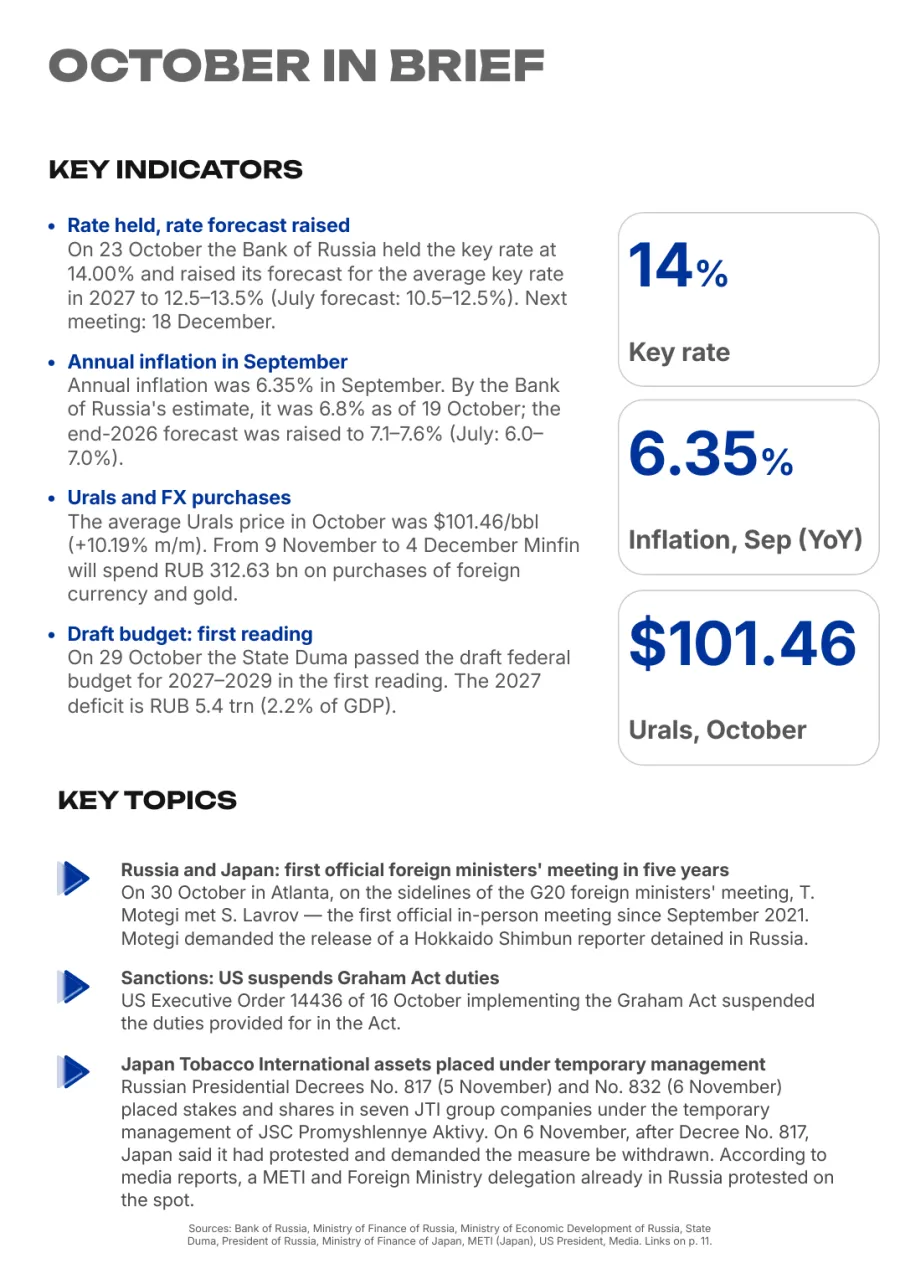
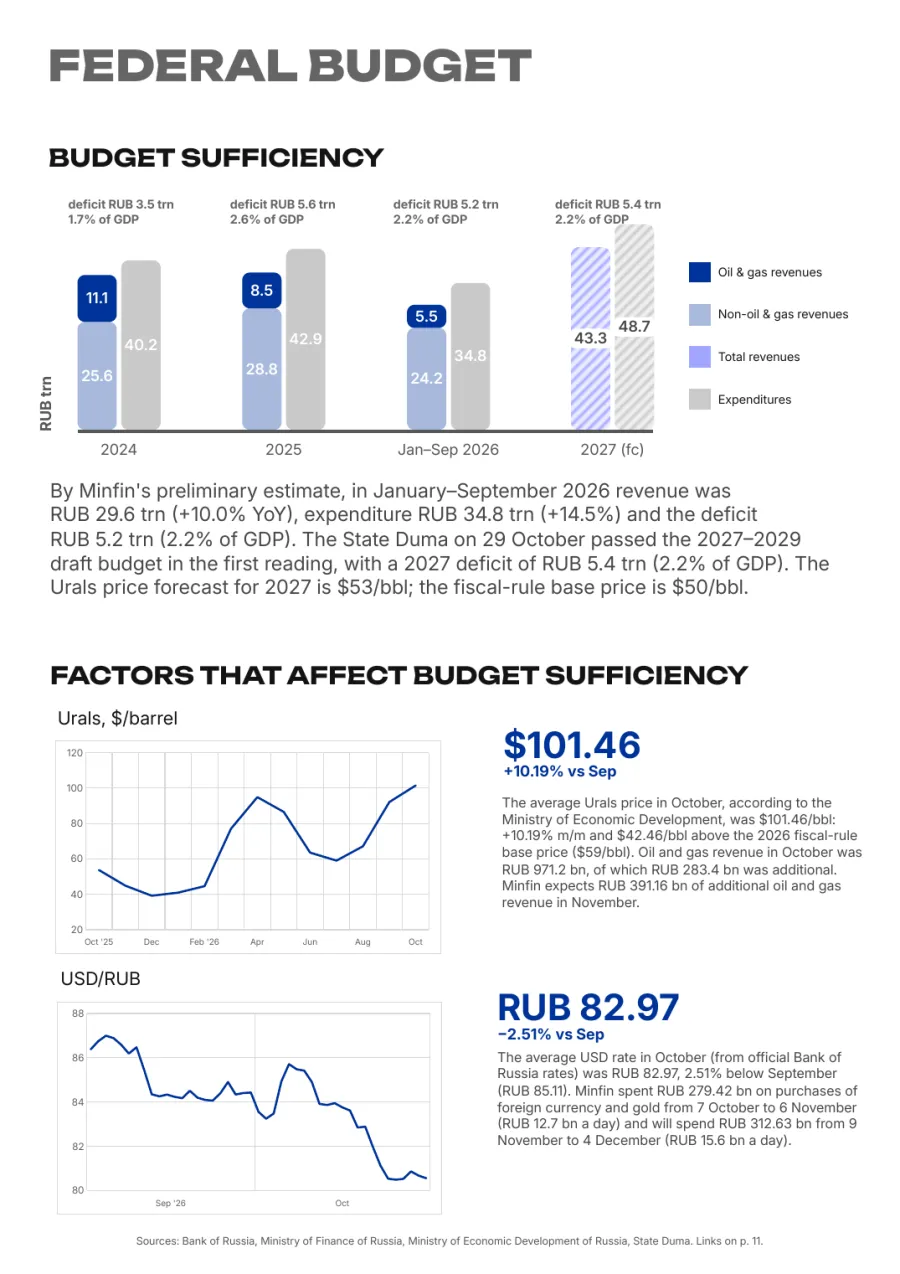
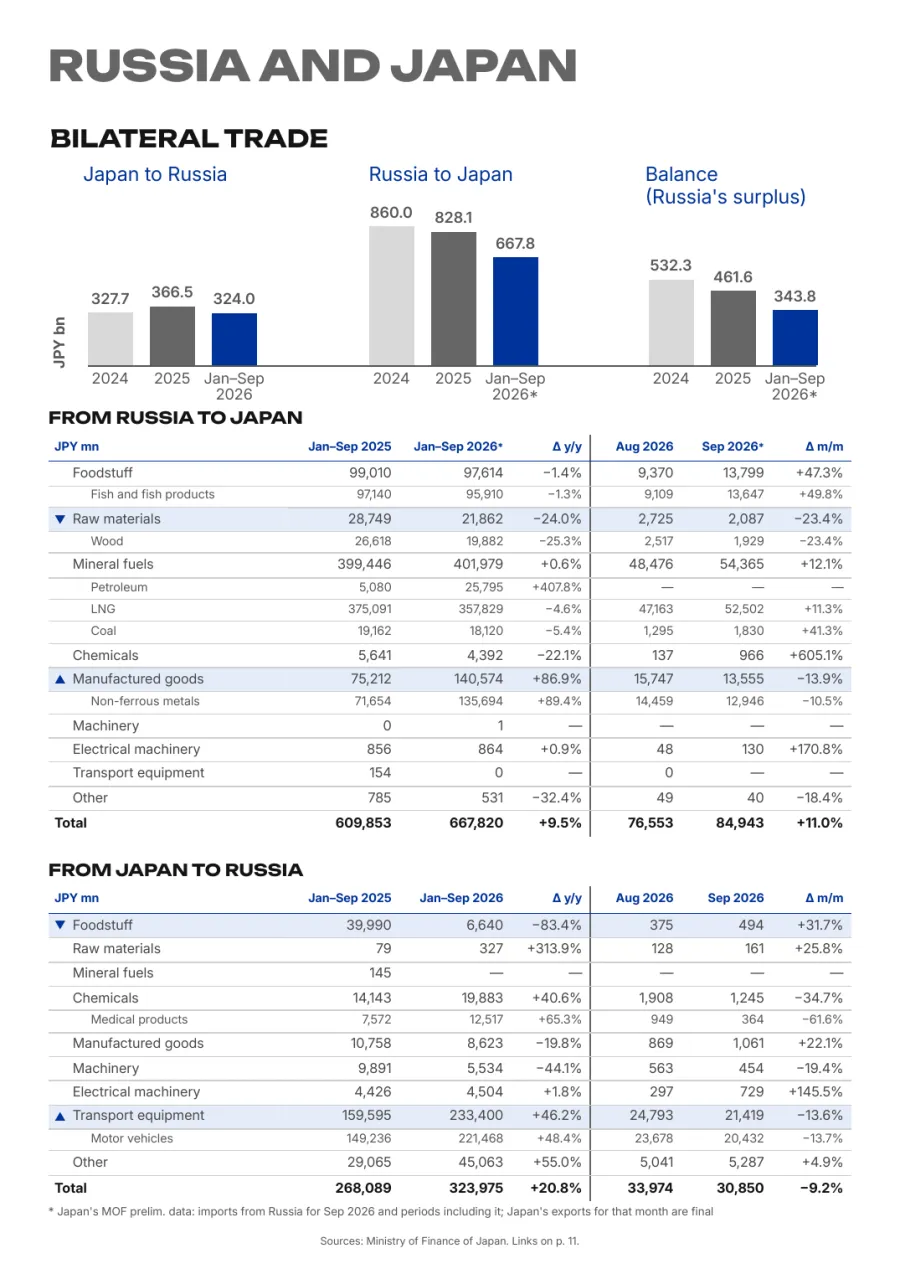
- 12 × 3pages in Russian, Japanese and English
- 1 543facts confirmed by code against copies of the primary sources
- 0figures typed by the model: code puts the numbers into the text
- ≈ 4 hof net time from the sample to the first verified version
A review with no room for error
The review goes to clients in Japanese. In such a document, a mistake in a figure, a date or the translation costs more than the whole issue — and it is assembled from dozens of sources, in three languages, with a full layout.
Reliability here comes not from the model “making no mistakes” but from the way the process is built: a mistake cannot slip through unnoticed. Every number has an address, every step is checked by someone else, and everything irreversible stays with a human.
Five rules that hold everything together
01The model does not type figures
The text contains tags; code inserts the value from the register. A figure that does not come from a tag stops the build. The text, the tables, the charts and every language use one and the same number.
02No fact without a quote
The source is saved as it is, and a verbatim quote goes into the register. Code checks that the quote is in the copy and the number is in the quote.
03Whoever writes does not check
The text is checked by a different model that does not see the author's reasoning. The translation is checked by blind back-translation.
04A clean PDF — after sign-off
Until a human has dealt with every flag on the reconciliation sheet, the pages carry a “draft” mark.
05A human sends it out
The project sends nothing anywhere. Choosing the topics, signing and distribution stay with people — by design.
Fifteen agents and one editor
Every agent has its own role, a narrow task and a clean context. The coordinator hands out the tasks but collects no figures and writes no text itself.
Collection
model
Six collectors in parallel: monetary policy, banks, statistics, the budget, trade, and sanctions and events.
Register check
code
The copy of the source has not changed, the quote is in the copy, the number is in the quote. Percentages and sums are computed by code.
Text
model
The author writes the Russian original with tags. A skeptic on a different model checks every statement against the sources.
Translation
model
Japanese and English follow a glossary of 124 terms. The Japanese is translated back blind and compared for meaning.
Layout
code
Numbers, dates and units in every language are inserted by code. The charts and tables are built from the same facts.
Sign-off
human
The reconciliation sheet brings anything disputable to the top. A native speaker proofreads the Japanese, and the editor signs.
- Where it started
- The input was a PDF of the previous issue, assembled by hand, and a Figma mock-up with read-only access. The new issue follows the sample in structure and layout — 92–99% of the pixels on each page match — while all the data was collected anew from primary sources: the versions of the sample disagreed with each other in 21 places, and none of them could serve as the reference for the figures.
- Review
- The pages of an issue are ordinary HTML that looks like A4 sheets on screen. Staff leave comments on a paragraph, a chart or a table on a private website; the text cannot be edited there. The PDF is printed from the approved page, and code compares its text with that page.
- Models
- The text a client will see is written by the strongest model and always checked by a different one: Opus 5.5 writes and Fable 5.1 checks; Fable translates and Opus translates back. The reasoning effort is set explicitly for every step.
- Resources
- The first version of the issue took about 7.8 hours of agent work and 1,859 requests — roughly $270–320 at API prices, half of which went into one-off setup: the template, the checking tools and the reconciliation sheet. The collectors ran in parallel, so by the clock the data collection took an hour and a half.
The same rails — for any recurring analytics
Only two things here are tied to macroeconomics: the list of sources and the plan of topics. The register of facts, the tags in the text, the independent check, the reconciliation sheet and the human signature work the same way whatever the document is about.
An industry review, a report for the board of directors, a quarterly note to investors, price monitoring or a digest of regulatory changes can be built the same way — anything that comes out on a schedule, relies on published data and does not forgive mistakes.
Changes from report to report
- The sources and their publication calendar
- The plan of topics and the set of sections
- The layout template and the brand style
- The glossary and the set of languages
Stays as it is
- The register of facts with copies of the primary sources
- Text with tags: code inserts the figures
- Checking by a different model and back-translation
- The reconciliation sheet and the human signature